
In the landscape of 2026 elementary education, the “one-size-fits-all” classroom is a relic of the past. For neurodivergent students—including those with Autism, ADHD, and Sensory Processing Disorder (SPD)—the traditional classroom can be a minefield of sensory triggers. High-contrast primary colors, flickering fluorescent lights, and the constant hum of activity can lead to “sensory overload,” manifesting as withdrawal, anxiety, or dysregulation.
Modern sensory-friendly design is not about creating a “special” space for some; it is about Universal Design for Learning (UDL). By modifying the environment to support the most sensitive nervous systems, we create a more focused, calm, and productive learning space for every child in the room.
1. Visual Environment: Beyond the Rainbow
The visual “noise” in many elementary classrooms is overwhelming. Research now supports moving toward a “Low-Arousal” aesthetic to help students maintain focus on their work rather than the walls.
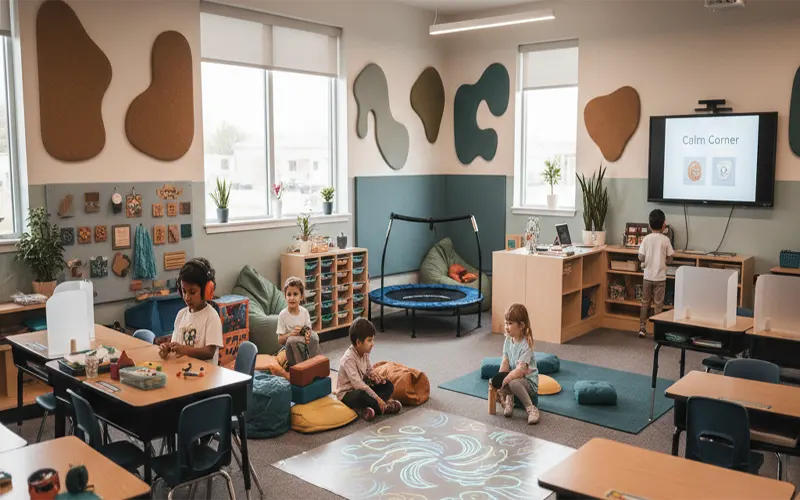
- Muted Color Palettes: Replace bright reds and yellows with soothing neutrals like sage green, soft blues, and warm creams. These colors lower heart rates and promote a sense of psychological safety.
- Lighting Overhaul: Fluorescent lights are notorious for a sub-visible flicker that can cause headaches and “agitation” in autistic students. In 2026, many classrooms have switched to dimmable LED panels or use blue-tinted light filters to soften the glare.
- Decluttering & Hidden Storage: Visual clutter is a cognitive tax. Use closed cabinets, neutral fabric curtains to cover open shelving, and clear bins with simple labels to reduce the “visual static” of classroom supplies.
2. Acoustic Engineering: Taming the Hum
Sound is one of the most common triggers for sensory-averse students. Creating a “whisper-quiet” environment requires intentional material choices.
- Sound Dampening: Felt wall panels, thick area rugs, and rubber “tennis ball” feet on chairs can drastically reduce the “scraping” and “echoing” that often plagues large rooms.
- Acoustic Zoning: Use bookshelves or portable partitions to create “Sound Buffers.” This allows for a high-decibel collaborative zone and a low-decibel focused zone to exist in the same room without interfering with each other.
- Ambient Control: Providing high-quality noise-canceling headphones (like the 2026 Alpine Muffy models) gives students autonomy to “opt-out” of the noise during transition periods.
3. Dynamic Seating: The Proprioceptive Edge
For many neurodivergent students, sitting still is not a prerequisite for learning—it is a barrier to it. Flexible seating supports the Proprioceptive system (knowing where your body is in space) and the Vestibular system (balance and movement).
- Wobble Stools & Therapy Balls: These allow for small, “micro-movements” that help students with ADHD stay alert and focused during direct instruction.
- Floor Cushions & Bean Bags: These provide “grounding” for students who prefer to work in a low-center-of-gravity position.
- Weighted Support: Weighted lap pads or “weighted stuffed animals” (no more than 5–10% of a child’s body weight) provide deep pressure that can be incredibly organizing and calming during high-concentration tasks.
4. The “Heavy Work” Station: Proactive Regulation
“Heavy work” involves activities that pull or push against the muscles and joints. It is one of the most effective ways to help a dysregulated student find their “center” again.
- Naturally Occurring Heavy Work: Assign “Classroom Jobs” that provide sensory input, such as pushing the lunch trolley, stacking chairs, or carrying a basket of books to the library.
- The Movement Corner: Designate a small area with a mini-trampoline, resistance bands (attached to chair legs), or a “Wall Push-up” station.
- Animal Walks: Use “Bear Walks” or “Crab Walks” as a fun way to transition from the carpet back to desks, providing intense proprioceptive input.
Sensory Profile vs. Design Solution
| Sensory System | Common Trigger | 2026 Design Solution |
| Visual | Fluorescent flicker/Clutter | Dimmable LEDs; Hidden storage/fabric covers. |
| Auditory | Chair scraping/Loud bells | Rubber floor tiles; Haptic (vibration) timers. |
| Tactile | “Scratchy” rugs/textures | Muted, soft-touch fabrics; smooth wood surfaces. |
| Proprioceptive | Difficulty staying in seat | Wobble stools or weighted lap pads. |
| Vestibular | Need to move/spin | Sensory Pod Swings or “Active Seating” zones. |
5. The “Quiet Zone” 2.0: The Proactive Escape
In 2026, the “Calm-Down Corner” is no longer a place for punishment; it is a “Regulation Station” where students go voluntarily before they reach a breaking point.
- Sensory Pods: Inflatable “Peapods” or small pop-up tents provide a darkened, enclosed space that mimics the safety of a “cocoon.”
- Visual Timers: Tools like the Time Timer provide a visual representation of time passing, helping students understand exactly how long their regulation break will last.
- Sensory Bins: Stock the area with “Tactile Media” like kinetic sand, rice, or putty to help ground students through touch.
DIY Classroom Sensory Audit Checklist
- [ ] The “Squint” Test: Squint your eyes—is the room a sea of clutter, or are there clear, empty spaces for the eyes to rest?
- [ ] The “Ear” Check: Sit in a student’s chair during “quiet work.” Can you hear a loud humming from the HVAC or lights?
- [ ] The “Touch” Test: Are the rugs and chair surfaces comfortable, or are they rough and “scratchy”?
- [ ] The “Path” Check: Are pathways wide enough for students to move without bumping into each other?
Designing for Belonging
Sensory-friendly design is an act of empathy. When we remove the physical stressors of the classroom, we send a clear message to neurodivergent students: “This space was built for you.” By integrating muted colors, sound-dampening materials, and movement-friendly zones, we don’t just reduce “behavioral issues”—we unlock the immense potential of students who are finally comfortable enough to learn.