

Lifelong Learning Modules for Developing Workplace Soft Skills in Neurodivergent Adults

Lifelong Learning Modules for Developing Workplace Soft Skills in Neurodivergent Adults

In the 2026 labor market, “soft skills” have become the primary currency of career longevity. However, for decades, these skills—communication, collaboration, and adaptability—have been defined through a strictly neurotypical lens. For neurodivergent (ND) adults, traditional soft-skill training often feels like an instruction manual for “masking”: a taxing effort to mimic social cues that leads to burnout and high turnover.

To build a truly inclusive workforce, we must move toward Lifelong Learning Modules that are neuro-inclusive by design. These modules don’t seek to “fix” the individual; they seek to bridge the gap between different cognitive styles, viewing neurodivergent traits as professional assets rather than deficits.

1. The “Spiky Profile” and the Soft Skills Gap

The foundation of neuro-inclusive training is understanding the Spiky Profile. Traditional corporate training assumes a “flat” development of skills. In contrast, many autistic or ADHD adults exhibit extreme proficiencies in technical or analytical areas alongside significant …

Lifelong Learning Modules for Developing Workplace Soft Skills in Neurodivergent Adults Read More
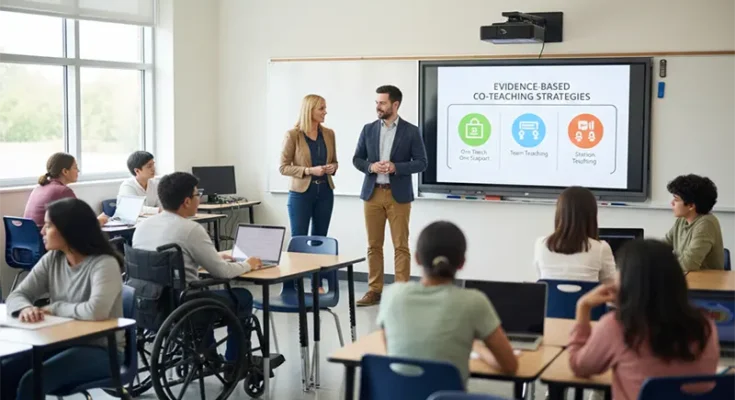

Best Evidence-Based Co-Teaching Strategies for Inclusive High School Classrooms

Best Evidence-Based Co-Teaching Strategies for Inclusive High School Classrooms

In the high-stakes environment of a 2026 inclusive high school, the “inclusion mandate” has shifted from simply providing access to ensuring instructional mastery for all students. Co-teaching is no longer just “having two adults in the room”; it is a sophisticated professional partnership that requires co-planning, co-instruction, and co-assessment to bridge the gap between rigorous state standards and diverse learner profiles.

For secondary educators, the challenge is unique: teachers must navigate complex disciplinary content (from Organic Chemistry to AP Statistics) while simultaneously addressing a wide range of neurodiverse needs. Success in this context depends on moving beyond the “Velcro assistant” model toward high-leverage practices that ensure Instructional Parity.

1. The High School Co-Teaching Continuum

Effective co-teaching is a cycle. If one teacher is consistently the “lead” while the other “drifts” to manage behavior, the classroom is not truly co-taught. High school students are highly perceptive; they must see both …

Best Evidence-Based Co-Teaching Strategies for Inclusive High School Classrooms Read More
Neurodiversity-Affirming Vocational Training for Adults with Autism

Neurodiversity-Affirming Vocational Training for Adults with Autism

The landscape of disability employment is undergoing a tectonic shift. For decades, vocational training for autistic adults was built on a “Medical Model”—viewing autism as a collection of deficits to be remediated. The goal was often to train individuals to “mask” their autistic traits to make neurotypical colleagues more comfortable.

In 2026, we have moved toward the Neurodiversity-Affirming Model. This approach recognizes that autism is a natural variation in the human genome and that the primary barriers to employment are often environmental and social, not biological.

1. The Paradigm Shift: From “Fixing” to “Fitting”

Affirming vocational training begins with a radical rejection of the “deficit” mindset. Instead of focusing on what a student cannot do, we look at their Spiky Profile—the common autistic phenomenon of having extreme strengths in some areas (like logic or memory) alongside challenges in others (like executive function or sensory processing).

  • Identity-First Language: Affirming
Neurodiversity-Affirming Vocational Training for Adults with Autism Read More
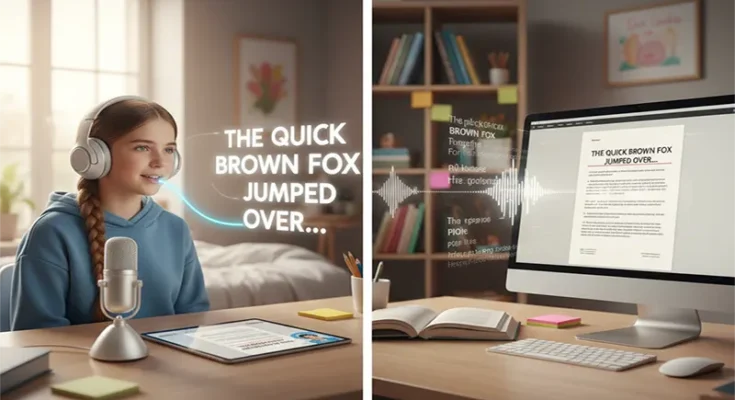
How to Use AI Speech-to-Text Tools for Students with Dyslexia

How to Use AI Speech-to-Text Tools for Students with Dyslexia

For students with dyslexia, the traditional writing process is often an exercise in frustration. The mental energy required to manage the mechanics—spelling, grammar, and syntax—frequently exhausts the “working memory,” leaving little room for the high-level critical thinking and creativity that these students often possess in abundance.

In 2026, AI Speech-to-Text (STT) has evolved from simple dictation into a sophisticated “cognitive bypass.” It allows students to move their ideas from mind to screen without the friction of the keyboard. This guide outlines how to leverage these tools to build a seamless, neuro-inclusive academic workflow.

1. The 2026 AI Landscape: From Dictation to Context

We have moved past “Dictation 1.0,” where students had to bark commands like “New Paragraph” or “Period.” Modern Context-Aware AI 2.0 tools understand natural speech patterns and automatically handle formatting.

  • Universal Integration: Tools like Wispr Flow and Willow now work across every application on a device (Mac, Windows,
How to Use AI Speech-to-Text Tools for Students with Dyslexia Read More