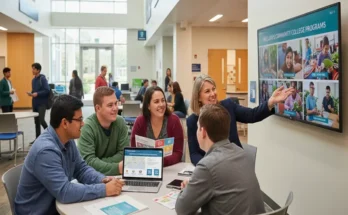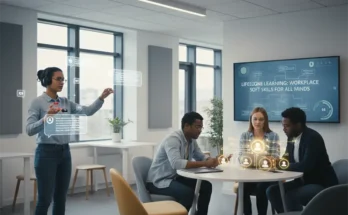
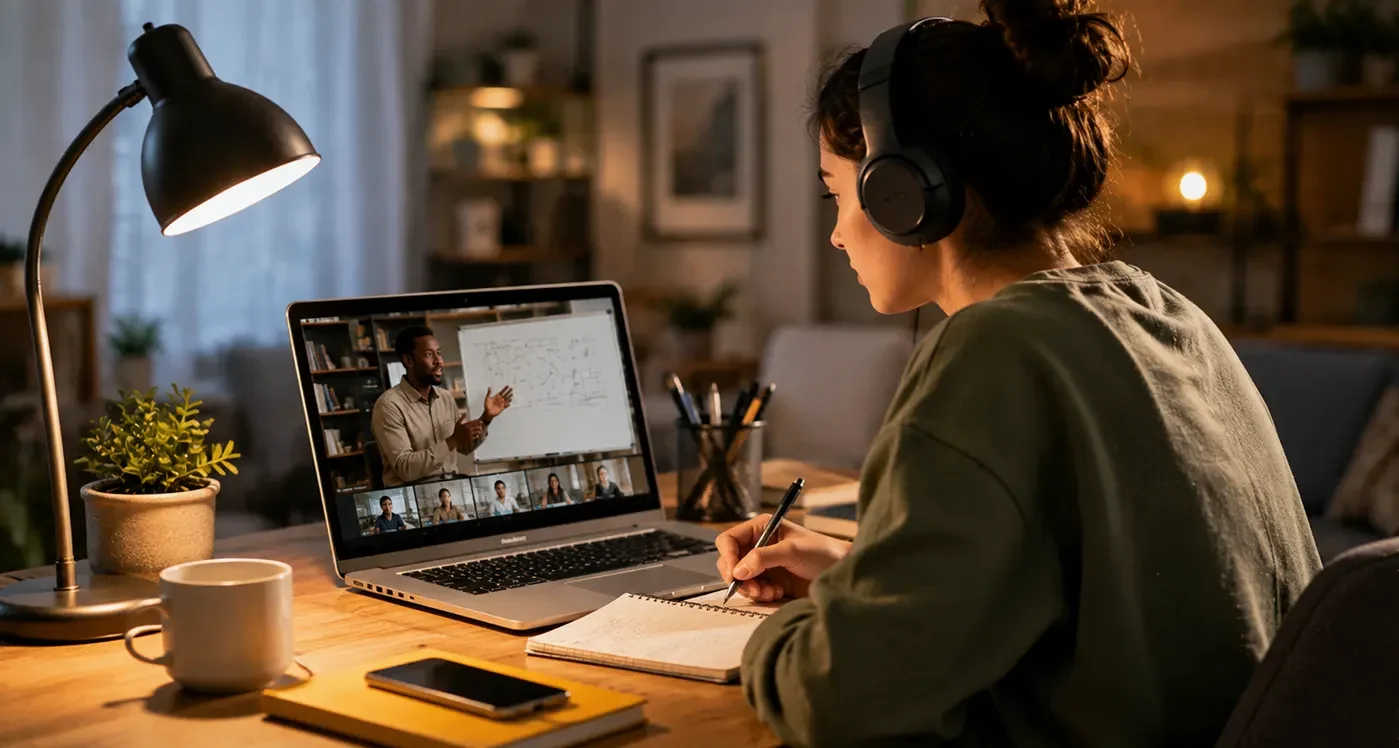
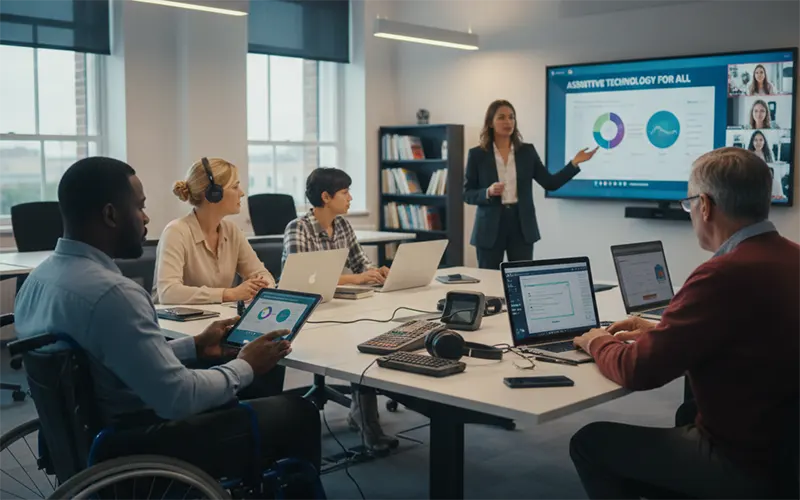
In 2026, the traditional boundaries of the classroom have dissolved. For the adult learner balancing a career, family, and continuing education, the “hybrid” model—where instruction happens simultaneously in-person and online—is the gold standard. However, the complexity of this environment can create significant barriers for learners with diverse needs.
Assistive Technology (AT) has undergone a radical shift: it is no longer a set of “extra” tools for a few students but is now the foundational infrastructure of the Inclusive Hybrid Suite. By leveraging AI-driven, interoperable tools, institutions can ensure that lifelong learning is accessible to every adult, regardless of their location or neurotype.
1. The “Invisible” Hybrid Bridge: Real-Time Access
In a hybrid classroom, the primary challenge is “synchronicity”—ensuring the remote student has the same level of access as the student sitting in the front row.
- AI-Powered Live Captioning: Tools like Microsoft Teams Premium and Otter.ai now provide near-instant, context-aware captioning. This isn’t just for the hard-of-hearing; it serves as a vital cognitive anchor for non-native speakers and students with ADHD who may struggle to sustain auditory focus during a 90-minute lecture.
- Smart Audio Environments: For those in the physical room, FM Listening Systems (like those from Phonak) now integrate directly with digital meeting platforms. This creates a “Voice-First” environment where the instructor’s audio is crystal clear for everyone, filtering out the background noise of the classroom or the digital static of a remote connection.
2. Cognitive Support: Managing the Adult Learner’s Load
Adult education is often as much about Executive Functioning as it is about content. Balancing complex course loads with professional life requires a specific breed of “Cognitive AT.”
- The AI “Thought Partner”: Tools like NotebookLM and Goblin.tools act as bridge-builders. For an adult student returning to school after a decade, the task of “writing a research paper” can be paralyzing. These tools use Atomic Task Analysis to break down a single prompt into a manageable checklist, reducing the “Executive Load” and allowing the student to focus on their ideas.
- Visual Scheduling & Time Blindness: Tiimo has become the 2026 standard for visual planning. It replaces abstract calendars with icon-based timelines and haptic countdowns, helping neurodivergent adults manage the “switching cost” of moving from a work meeting to a hybrid seminar.
3. Sensory and Physical Accessibility in 2026
Accessibility in the hybrid space must account for the physical interface of learning.
- Vision: High-Fidelity TTS: Speechify and NaturalReader have moved beyond robotic voices to high-fidelity, emotive AI narrators. Adult learners now use these as “Productivity AT,” listening to dense academic journals while commuting, which serves both students with dyslexia and those with visual impairments.
- Physical: Robotic & AI Chairs: At CES 2026, exhibitors like XSTO and WheelMove debuted AI-powered power chairs and power-assist devices that integrate with campus navigation apps. For the hybrid learner, this means the physical campus becomes as navigable as the digital LMS.
4. Hybrid AT Toolkit: 2026 Comparison Table
| Challenge | 2026 Assistive Solution | Benefit for Adult Learners |
| Auditory Processing | Otter.ai / Wispr Flow | Live, searchable transcripts for “re-listening” after work. |
| Reading/Dyslexia | Speechify AI | Converts any PDF into a natural-sounding podcast. |
| Executive Function | Goblin.tools | “Magic To-Do” breaks down complex assignments instantly. |
| Mobility | WheelMove / MaaS-Bridge | Ensures physical accessibility on campus for hybrid sessions. |
| Focus/Burnout | Tiimo / Motion | AI-driven task scheduling based on “Energy Accounting.” |
5. Implementation: The Institution’s Responsibility
For Assistive Technology to be effective, it must be Interoperable. A tool is useless if it doesn’t “play nice” with the school’s Learning Management System (LMS).
- LMS Integration: In 2026, platforms like Canvas and Disco have built-in “Learning Design Agents” that automatically scan uploaded materials for accessibility, flagging missing alt-text or low-contrast visuals before the student ever sees them.
- The 5-Minute Accessibility Audit: Instructors are encouraged to perform a weekly check: Are the captions on? Is the reading list available in TTS format? Is the assignment broken into atomic steps?
6. The Rise of “Focus” Technology
The newest frontier in 2026 is Haptic Focus Tech. Wearable devices like Sensory Scribe track biometric signals (like heart rate variability) to detect rising stress or cognitive fatigue. For an adult learner in a high-pressure hybrid exam, the device provides a subtle haptic “nudge” to breathe or take a 60-second regulation break, preventing sensory burnout before it starts.
Reframing Human Potential
Assistive Technology in 2026 is no longer about “compliance”—it is about Empowerment. In the hybrid adult classroom, technology acts as the great equalizer. By removing the friction of the environment, we allow the adult learner’s experience, wisdom, and ambition to take center stage. When we design for the student who needs the most support, we create a more efficient, flexible, and powerful learning experience for everyone.