

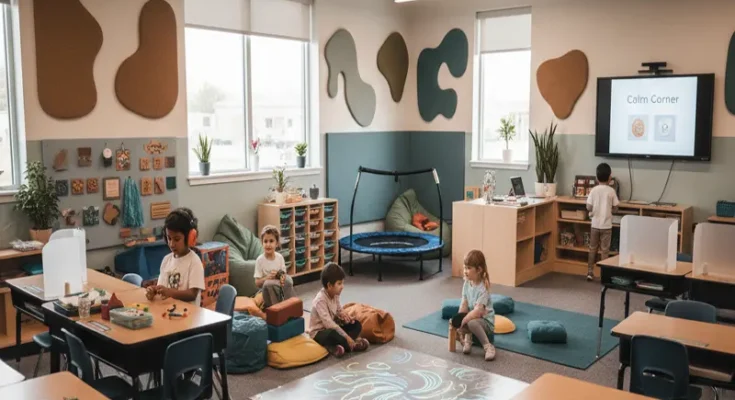
Sensory-Friendly Classroom Design Ideas for Neurodivergent Elementary Students
In the landscape of 2026 elementary education, the “one-size-fits-all” classroom is a relic of the past. For neurodivergent students—including those with Autism, ADHD, and Sensory Processing Disorder (SPD)—the traditional classroom can be a minefield of sensory triggers. High-contrast primary colors, flickering fluorescent lights, and the constant hum of activity can lead to “sensory overload,” manifesting as withdrawal, anxiety, or dysregulation.
Modern sensory-friendly design is not about creating a “special” space for some; it is about Universal Design for Learning (UDL). By modifying the environment to support the most sensitive nervous systems, we create a more focused, calm, and productive learning space for every child in the room.
1. Visual Environment: Beyond the Rainbow
The visual “noise” in many elementary classrooms is overwhelming. Research now supports moving toward a “Low-Arousal” aesthetic to help students maintain focus on their work rather than the walls.
- Muted Color Palettes: Replace bright reds and