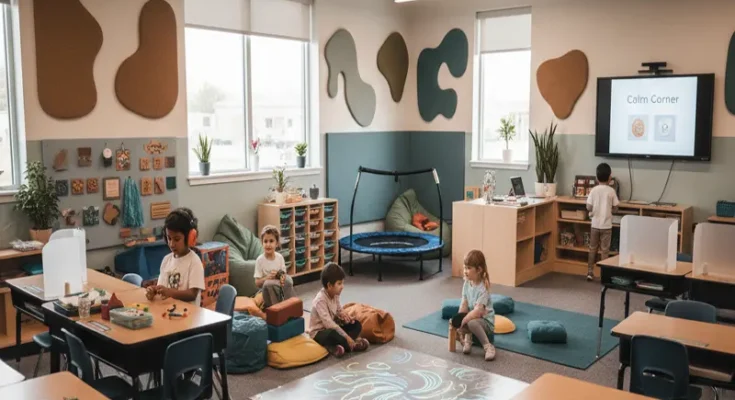

Sensory-Friendly Classroom Design Ideas for Neurodivergent Elementary Students

Sensory-Friendly Classroom Design Ideas for Neurodivergent Elementary Students

In the landscape of 2026 elementary education, the “one-size-fits-all” classroom is a relic of the past. For neurodivergent students—including those with Autism, ADHD, and Sensory Processing Disorder (SPD)—the traditional classroom can be a minefield of sensory triggers. High-contrast primary colors, flickering fluorescent lights, and the constant hum of activity can lead to “sensory overload,” manifesting as withdrawal, anxiety, or dysregulation.

Modern sensory-friendly design is not about creating a “special” space for some; it is about Universal Design for Learning (UDL). By modifying the environment to support the most sensitive nervous systems, we create a more focused, calm, and productive learning space for every child in the room.

1. Visual Environment: Beyond the Rainbow

The visual “noise” in many elementary classrooms is overwhelming. Research now supports moving toward a “Low-Arousal” aesthetic to help students maintain focus on their work rather than the walls.

  • Muted Color Palettes: Replace bright reds and
Sensory-Friendly Classroom Design Ideas for Neurodivergent Elementary Students Read More
Best Assistive Technology for Adult Continuing Education in Hybrid Classrooms

Best Assistive Technology for Adult Continuing Education in Hybrid Classrooms

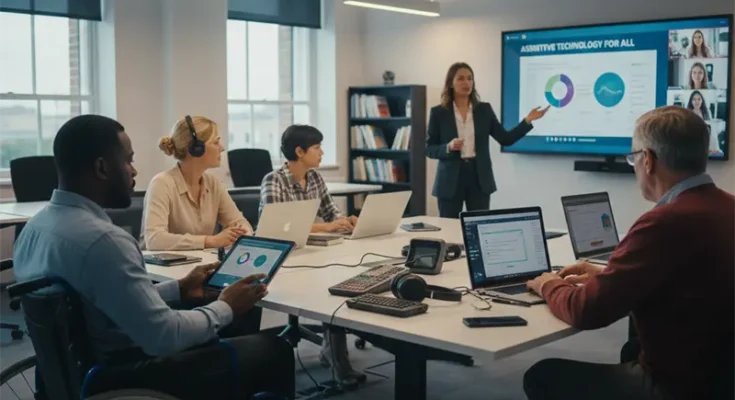
In 2026, the traditional boundaries of the classroom have dissolved. For the adult learner balancing a career, family, and continuing education, the “hybrid” model—where instruction happens simultaneously in-person and online—is the gold standard. However, the complexity of this environment can create significant barriers for learners with diverse needs.

Assistive Technology (AT) has undergone a radical shift: it is no longer a set of “extra” tools for a few students but is now the foundational infrastructure of the Inclusive Hybrid Suite. By leveraging AI-driven, interoperable tools, institutions can ensure that lifelong learning is accessible to every adult, regardless of their location or neurotype.

1. The “Invisible” Hybrid Bridge: Real-Time Access

In a hybrid classroom, the primary challenge is “synchronicity”—ensuring the remote student has the same level of access as the student sitting in the front row.

  • AI-Powered Live Captioning: Tools like Microsoft Teams Premium and Otter.ai now provide near-instant, context-aware
Best Assistive Technology for Adult Continuing Education in Hybrid Classrooms Read More
Data-Driven Progress Monitoring Tools for Virtual IEP Meetings

Data-Driven Progress Monitoring Tools for Virtual IEP Meetings

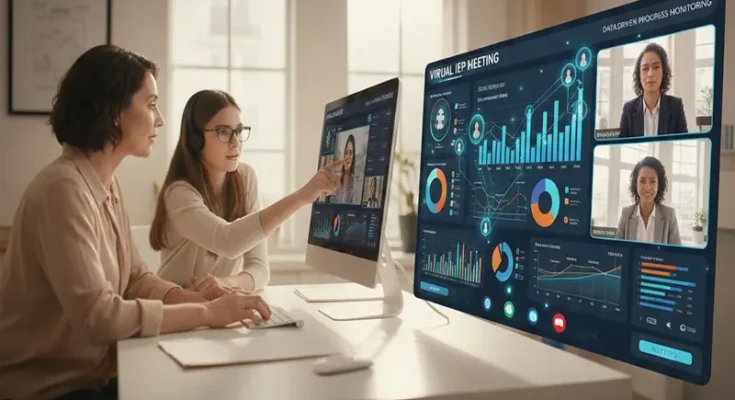
In 2026, the Individualized Education Program (IEP) has evolved from a static, bureaucratic document into a dynamic “living roadmap.” The shift toward virtual meetings—once a necessity—has become a preferred standard for many families and districts, offering greater flexibility and attendance. However, the move to digital platforms has highlighted a critical flaw in traditional reporting: static PDF progress reports and verbal anecdotes are no longer sufficient to justify high-stakes educational decisions.

Modern special education requires Visual Data Storytelling. By leveraging real-time progress monitoring tools, IEP teams can move away from “narrative descriptions” and toward objective, data-driven insights that foster collaboration, reduce conflict, and improve student outcomes.

1. The Shift to Visual Data Storytelling

The most significant advancement in 2026 IEP meetings is the transition from raw numbers to visual narratives. In a virtual environment, a spreadsheet is difficult to digest via screen share and often leads to “Zoom fatigue.”

  • Trend
Data-Driven Progress Monitoring Tools for Virtual IEP Meetings Read More
Lifelong Learning Modules for Developing Workplace Soft Skills in Neurodivergent Adults

Lifelong Learning Modules for Developing Workplace Soft Skills in Neurodivergent Adults

In the 2026 labor market, “soft skills” have become the primary currency of career longevity. However, for decades, these skills—communication, collaboration, and adaptability—have been defined through a strictly neurotypical lens. For neurodivergent (ND) adults, traditional soft-skill training often feels like an instruction manual for “masking”: a taxing effort to mimic social cues that leads to burnout and high turnover.

To build a truly inclusive workforce, we must move toward Lifelong Learning Modules that are neuro-inclusive by design. These modules don’t seek to “fix” the individual; they seek to bridge the gap between different cognitive styles, viewing neurodivergent traits as professional assets rather than deficits.

1. The “Spiky Profile” and the Soft Skills Gap

The foundation of neuro-inclusive training is understanding the Spiky Profile. Traditional corporate training assumes a “flat” development of skills. In contrast, many autistic or ADHD adults exhibit extreme proficiencies in technical or analytical areas alongside significant …

Lifelong Learning Modules for Developing Workplace Soft Skills in Neurodivergent Adults Read More
Best Evidence-Based Co-Teaching Strategies for Inclusive High School Classrooms

Best Evidence-Based Co-Teaching Strategies for Inclusive High School Classrooms

In the high-stakes environment of a 2026 inclusive high school, the “inclusion mandate” has shifted from simply providing access to ensuring instructional mastery for all students. Co-teaching is no longer just “having two adults in the room”; it is a sophisticated professional partnership that requires co-planning, co-instruction, and co-assessment to bridge the gap between rigorous state standards and diverse learner profiles.

For secondary educators, the challenge is unique: teachers must navigate complex disciplinary content (from Organic Chemistry to AP Statistics) while simultaneously addressing a wide range of neurodiverse needs. Success in this context depends on moving beyond the “Velcro assistant” model toward high-leverage practices that ensure Instructional Parity.

1. The High School Co-Teaching Continuum

Effective co-teaching is a cycle. If one teacher is consistently the “lead” while the other “drifts” to manage behavior, the classroom is not truly co-taught. High school students are highly perceptive; they must see both …

Best Evidence-Based Co-Teaching Strategies for Inclusive High School Classrooms Read More