

Holistic Education: Nurturing Mind, Body, and Soul

Holistic Education: Nurturing Mind, Body, and Soul

Holistic education is an approach that focuses on the development of the whole person, encompassing not just academic knowledge but also emotional, physical, social, and spiritual well-being. By nurturing the mind, body, and soul of students, holistic education aims to create well-rounded individuals who are equipped to thrive in all aspects of life. In this article, we will explore the concept of holistic education and its importance in nurturing the holistic development of students.

Nurturing the Mind

In holistic education, nurturing the mind involves providing a well-rounded curriculum that goes beyond traditional academic subjects. It encourages critical thinking, creativity, problem-solving skills, and a love for learning. By engaging students in meaningful and relevant learning experiences, holistic education seeks to develop their intellectual abilities and cognitive skills. Encouraging curiosity, exploration, and independent thinking helps students develop a lifelong passion for learning and self-improvement.

Cultivating the Body

Physical well-being is a crucial …

Holistic Education: Nurturing Mind, Body, and Soul Read More
Design Thinking for Educational Technology Solutions

Design Thinking for Educational Technology Solutions

Design thinking is a problem-solving approach that has gained popularity in various fields, including education. This human-centered approach encourages educators and technologists to collaborate and create innovative solutions to address the challenges faced in the education sector. When applied to developing educational technology solutions, design thinking can lead to more effective and impactful tools that enhance the learning experience. In this article, we will explore how design thinking can be applied to develop educational technology solutions.

Understanding the User: Students and Educators

The starting point of design thinking is understanding the needs, goals, and aspirations of the end users. In the case of educational technology, the primary users are students and educators. Empathy is key to gaining a deep understanding of their challenges, desires, and learning preferences. Conducting interviews, observations, and surveys can help gather insights and identify pain points. By putting ourselves in their shoes, we can design technology …

Design Thinking for Educational Technology Solutions Read More
Emerging Technologies and Future Trends in Education

Emerging Technologies and Future Trends in Education

The education industry is at a crossroads, with new technologies and advancements reshaping the way we learn and teach. From virtual reality and artificial intelligence to blockchain-based certifications and personalized learning, the future of education promises to be more inclusive, accessible, and engaging. In this article, we’ll explore some of the emerging technologies and future trends shaping the education industry.

1. Virtual and Augmented Reality

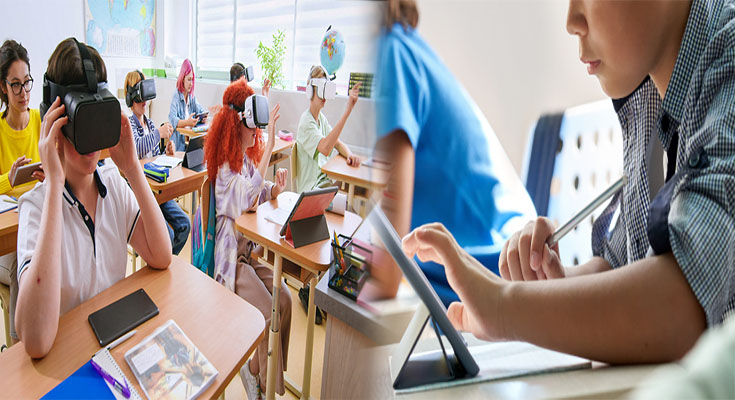
Virtual and augmented reality (VR/AR) technologies are transforming the way students learn by providing immersive, interactive, and engaging experiences. VR/AR can create simulations of real-life situations that allow students to gain hands-on experience and enhance their critical thinking skills. These technologies offer a new dimension to learning, providing opportunities to visualize complex concepts, explore diverse environments, and engage with interactive content. Additionally, VR/AR can be used to improve teacher training, allowing educators to practice their skills in a virtual environment.

2. Artificial Intelligence and Machine

Emerging Technologies and Future Trends in Education Read More
Assessment Strategies for Effective EdTech Integration

Assessment Strategies for Effective EdTech Integration

In today’s educational landscape, the integration of educational technology (EdTech) has become a driving force in enhancing teaching and learning experiences. However, to ensure that EdTech is effectively integrated into the classroom, educators need to implement robust assessment strategies. In this article, we will delve into the significance of assessment strategies for effective EdTech integration and explore various approaches that educators can employ to evaluate the impact of technology on student learning.

The Importance of Assessment Strategies for EdTech Integration

Assessment strategies play a pivotal role in determining the efficacy of EdTech integration and its impact on student outcomes. Effective assessment enables educators to gauge the extent to which technology is enhancing student engagement, fostering critical thinking, and improving overall learning experiences. By evaluating the effectiveness of EdTech, educators can make data-informed decisions to refine their instructional approaches and optimize the integration of technology in their teaching practices.

Assessment Approaches

Assessment Strategies for Effective EdTech Integration Read More
Digital Equity and Inclusion in Education Technology Master's Programs

Digital Equity and Inclusion in Education Technology Master’s Programs

As technology continues to play a crucial role in education, ensuring digital equity and inclusion has become a top priority for educators and education technology leaders. In Master’s programs focused on education technology, the promotion of digital equity and inclusion is essential to prepare educators to address the diverse needs of students and create equitable learning environments. In this article, we will explore the importance of digital equity and inclusion in Education Technology Master’s programs and how these programs can help shape the future of education.

Understanding Digital Equity and Inclusion in Education Technology Master’s Programs

Digital equity refers to ensuring that all students have access to technology tools, resources, and opportunities, regardless of their socio-economic background, geographical location, or other factors. Inclusion, on the other hand, involves creating learning environments where all students feel valued, respected, and supported, regardless of their background, identity, or abilities.

In Education Technology Master’s …

Digital Equity and Inclusion in Education Technology Master’s Programs Read More